
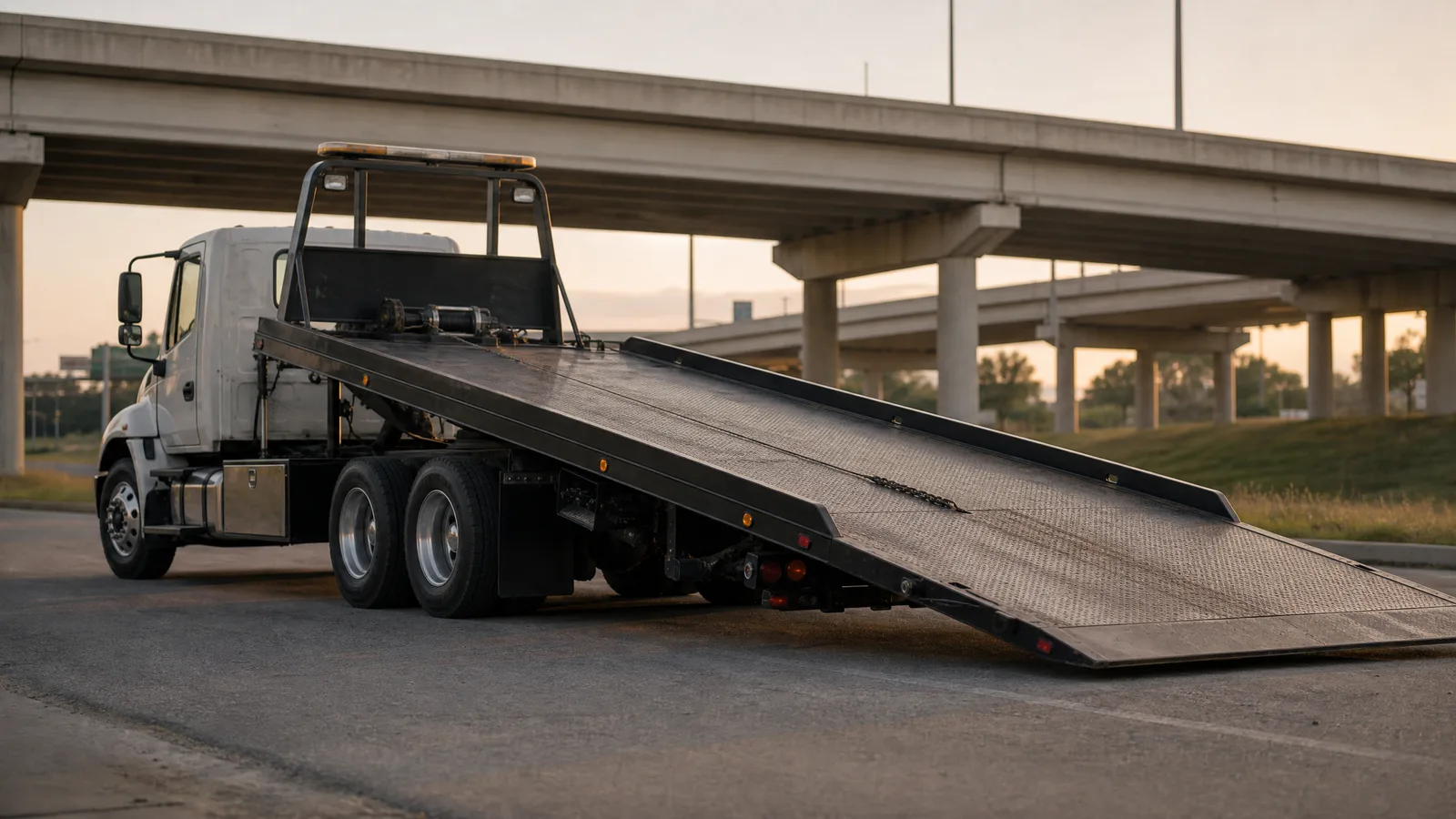
Texas Tow Truck Insurance Starts With Your TDLR Permit
Towing in Texas is licensed by the Texas Department of Licensing and Regulation under Texas Occupations Code Chapter 2308. Unlike freight trucking, where the FMCSA sets the floor, a tow operator working inside Texas answers to TDLR, and the insurance minimum is set by which of the three permit types you hold.
| TDLR permit type | Liability minimum | Cargo / on-hook minimum |
|---|---|---|
| Consent towing | $300,000 per tow truck per incident | Not required by the rule |
| Private property towing | $300,000 per tow truck per incident | $50,000 per tow truck per incident |
| Incident management towing | $500,000 per tow truck per incident | $50,000 per tow truck per incident |
Source: the amounts are set in the licensing statute itself, at Texas Occupations Code Sections 2308.103, 2308.104, and 2308.105, and restated as a combined single limit per occurrence by the TDLR rule at 16 Texas Administrative Code Section 86.400, which TDLR publishes with the rest of its towing rules. As of 2026. Verify current limits with TDLR before binding coverage, since statutes and rules change.
The permit types map to how the tow starts. Consent towing is work the vehicle owner asked for, like breakdowns and motor club calls. Private property towing is non-consent removal from apartment complexes, HOAs, and business lots. Incident management towing is police-directed clearance at accident scenes, and it carries the highest minimum because it is the highest-exposure work: live traffic, wrecked vehicles, and injured parties.
What the TDLR Rule Requires of the Certificate
The limits are only half of 16 TAC 86.400. The rest is filing mechanics, and it is the half that costs operators their permits:
- The certificate is filed electronically with the initial application, again at renewal, on a change in the business, and whenever the department asks for it.
- The insurer must be licensed and authorized in Texas, and the name and address on the certificate have to match the permit. A mismatch is a rejected filing.
- Coverage must stay in force continuously, and the certificate has to carry a provision giving TDLR thirty days' notice before any cancellation takes effect.
- A lapse without a replacement filing can cost the permit. If your insurer becomes insolvent you have ten days to file replacement coverage.
- Evidence of insurance rides in the cab of every permitted truck, in a form the department approves.
Permits Attach to Trucks. Licenses Attach to People.
Every tow truck used for consent or nonconsent towing on a Texas public roadway needs its own permit, and each truck is permitted separately (Section 2308.101). Separately, under Section 2308.151, a person may not perform towing operations or run a towing company without the matching license. The operator licenses come in the same three types as the permits, and TDLR requires incident management and private property applicants to complete an approved certification program first. Consent-only operators do not need certification. TDLR publishes a $75 non-refundable application fee per truck for permits and a $100 fee for an operator license, both running up to one year from issue.
An underwriter will ask which permit and license types you hold, because between them they describe the work. Incident management is the highest-exposure class in the chapter, and it is priced that way.
Below the state sits the city or county. Section 2308.201 lets a political subdivision require registration of any tow truck performing a nonconsent tow inside its territory, no matter where the business is based, with local license or permit fees capped at $15. Rotation lists and impound contracts run on that authority, which is why their certificate conditions are set locally rather than by TDLR.
The Permit Minimum Is Not the Coverage You Actually Need
Two forces push real-world coverage above the TDLR floor:
- Contracts set their own limits. Police rotation lists in the major metros, municipal impound contracts, and motor clubs commonly require $1 million in liability before they will dispatch you. If rotation work is part of your plan, price your policy at the contract requirement, not the permit minimum.
- The exposure outruns the floor. A tow truck works inches from traffic, hauls other people's vehicles, and backs into tight lots. One serious at-fault accident with injuries can move past $300,000 quickly. The gap between the permit minimum and the judgment is yours.
Coverage Beyond the Permit
- On-hook coverage. The customer's vehicle while it is on your truck. The TDLR's $50,000 cargo/on-hook minimum is sized for ordinary vehicles; a single newer truck or luxury car can exceed it.
- Garagekeeper's coverage. Vehicles stored at your lot. Texas licenses vehicle storage facilities separately under Occupations Code Chapter 2303, and one hailstorm over an uncovered lot is a claim on every vehicle in it.
- Physical damage. Your own trucks. Heavy-duty wreckers and rotators are expensive units, so physical damage coverage is usually required by the lender and sensible even without one.
- General liability. Non-driving exposure: a customer slips at your lot, or a release dispute turns into a claim. See general liability for trucking operations.
- Workers compensation or occupational accident. Texas does not require workers comp for most private employers, but tow work is physical and roadside. Operators with employees should price both options.
Where the Work Is in Texas
Texas has one of the largest tow markets in the country, and the mix of work varies by metro. Freeway incident management and private property work dominate in Houston, Dallas, and San Antonio, all of which run police rotation programs with their own insurance requirements. Long-haul corridors like I-10, I-20, I-35, and I-45 generate heavy-duty recovery work far from service centers, and border operations in Laredo and El Paso add cross-border recovery arrangements.
The compliance side matters to your premium too. Chapter 2308 sets strict rules on storage, notification, fees, and dispute handling, and violations feed liability claims. An agent who writes Texas tow operations will ask about your TDLR history for exactly that reason.
Getting Quotes as a Texas Tow Operator
Tow insurance is specialty work: the on-hook, garagekeeper's, and rotation-contract pieces are structured, not just priced, and not every commercial agent writes them. Here is how to find and vet an agent who handles tow operations. For the rest of the Texas picture, start with commercial truck insurance in Texas or the Texas truck-type overview.