
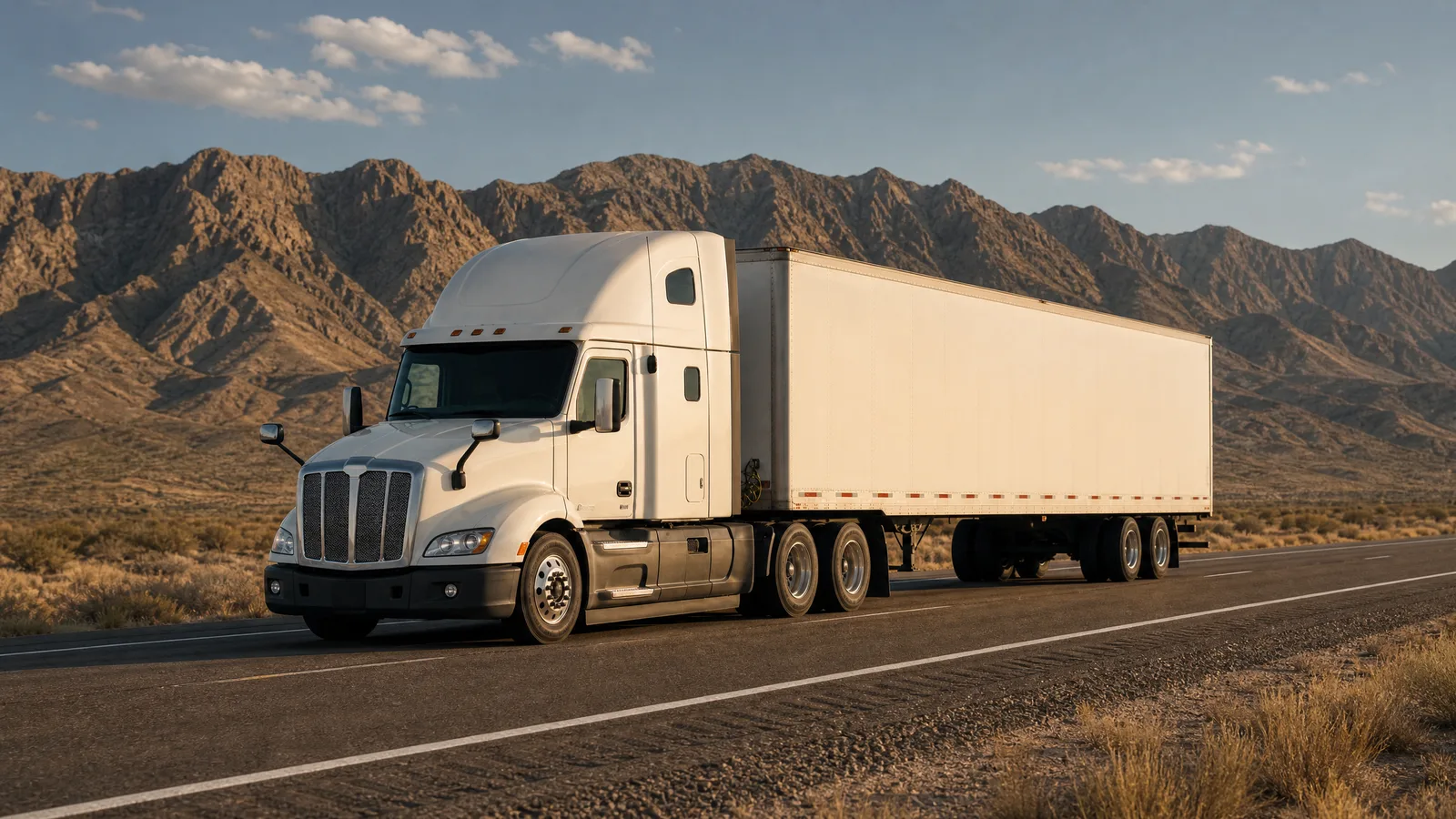
Why El Paso Coverage Crosses the Border
El Paso is the western terminus of the NAFTA freight corridor and one of the largest US-Mexico border crossings by total truck volume. The metro sits at the intersection of West Texas freight, Mexican manufacturing freight (maquiladora plants in Ciudad Juarez), and long-haul I-10 corridor traffic. Commercial trucking insurance in El Paso reflects all of those factors: cross-border coverage requirements, long-distance corridor exposure, and a unique mix of customers ranging from major manufacturers to single-truck owner-operators.
El Paso commercial trucking insurance is the same product set as anywhere else in the US, but cross-border operations require coverage that other Texas metros (with the exception of Laredo) typically do not need.
The Trucking Industry in El Paso
- Cross-border freight. The Bridge of the Americas, Ysleta-Zaragoza, and other El Paso area crossings handle billions of dollars in trade annually with Ciudad Juarez and the rest of Mexico. Operators who cross the border regularly need both US and Mexican insurance and often handle in-bond freight or transfer cargo at the border.
- Maquiladora freight. Hundreds of manufacturing plants in Ciudad Juarez and surrounding Mexican border areas produce automotive components, electronics, medical devices, and consumer products. Most of this freight moves to and from US distribution and assembly facilities through El Paso.
- I-10 corridor freight. El Paso to Houston via I-10 is over 800 miles. El Paso to California via I-10 west is hundreds more. El Paso operators routinely run thousands of miles per week.
- Federal facility freight. Fort Bliss (one of the largest US Army installations) generates significant DoD freight movement. Other federal facilities (including federal law enforcement and border-related agencies) also produce freight contracts.
- West Texas oilfield support. The Permian Basin extends into West Texas. Some El Paso operators handle Permian-related freight.
- Construction trucking. El Paso has steady population growth and military installation expansion that supports construction freight.
Insurance Requirements for El Paso Operators
Federal FMCSA minimums apply for interstate operations (49 CFR 387.9). Texas intrastate minimums apply for in-state operations (TxDMV rule 43 TAC 218.16). Cargo insurance has no federal minimum for general freight; brokers and shippers set the requirement, typically $100,000+. For the full breakdown, see the Texas truck insurance requirements guide.
Cross-border operations add specific requirements:
- Mexican auto insurance. US policies do not cover claims in Mexico. Mexican law requires liability insurance for all vehicles operating on Mexican roads. Coverage must be issued by a Mexican-licensed insurer.
- Customs bonds. Operators handling in-bond freight need a customs bond. The bond covers duties owed to US Customs if the freight does not properly enter or leave the country.
- C-TPAT certification. Customs Trade Partnership Against Terrorism is voluntary but often required by larger shippers and gives operators expedited border crossing.
Coverage for El Paso Operators
- US commercial auto liability. $1 million minimum, often $2 million for major shipper contracts. FMCSA $750,000 federal minimum for general freight.
- Mexican auto insurance. Required for any operations south of the border. Most El Paso agents can quote combined US and Mexican packages.
- Cargo insurance with cross-border endorsement. Standard cargo policies often have territorial limitations. Operators crossing the border need policies that explicitly cover Mexican operations, usually in coordination with Mexican-issued cargo coverage.
- Customs bond. Required for in-bond freight. Single-trip and continuous bond options.
- Physical damage with theft endorsements. Truck and cargo theft risk near the border has historically been higher than interior US operations. GPS tracking and security measures often required.
- Government contracting endorsements. Federal facility freight contracts often require additional insured endorsements, waiver of subrogation, and primary and non-contributory language.
- General liability. Standard $1M / $2M for operators handling freight at warehouses, terminals, or customer sites.
Insurance Cost Considerations in El Paso
- Cross-border coverage adds cost. Mexican auto insurance, cross-border cargo endorsements, and customs bonds all add to the total annual cost compared to US-only operations.
- I-10 corridor mileage. Long-haul exposure factors into liability rating. Higher mileage means more premium.
- Lower hurricane and hail exposure than DFW or Houston. Physical damage rates can run modestly lower in El Paso for that reason.
- Theft and security factors. Border-area theft risk pushes some carriers to require GPS tracking, dashcams, and specific routing as conditions of coverage.
- Limited carrier competition. El Paso has fewer agents and carriers actively writing border crossing coverage than DFW or Houston have for general trucking. This can affect pricing.
For specific cost ranges, see our commercial truck insurance cost guide.
How to Get El Paso Trucking Insurance Quotes
Cross-border insurance is a specialty within commercial trucking. Operators running into Mexico need agents who write both US and Mexican coverage and who understand customs bond requirements. Operators handling federal facility freight need agents familiar with DoD contractor insurance. Domestic-only operators (running purely US) can work with general commercial trucking agents.
Find an agent who serves the El Paso market. Tell them whether you cross the border, what you haul, and what your customers require. The right agent will quote both US and cross-border options.