
What Separates Fort Worth from the Dallas Side
Fort Worth is the western half of the DFW metroplex and shares the same broad commercial trucking market as Dallas, but several Fort Worth-specific freight segments shape what operators here typically carry. The BNSF Alliance Intermodal Facility north of the city handles container traffic from West Coast ports to the Midwest. Barnett Shale oilfield service work continues across western Tarrant County. Construction demand is steady. I-35W, I-30, and I-20 all converge in or around Fort Worth.
Fort Worth commercial trucking insurance uses the same product set as anywhere else in DFW, but the local mix of intermodal, oilfield, and construction operators creates demand for specific endorsements and carrier programs that are less common in more retail-focused metros.
The Trucking Industry in Fort Worth
- BNSF Alliance Intermodal. One of the largest inland intermodal facilities in North America. Drayage operators move containers between Alliance and customer DCs across DFW and beyond. Repeat-customer work with steady volume.
- Barnett Shale oilfield service. Crew haulers, frac sand operators, drilling component movers, and oilfield waste haulers operate across western Tarrant, Wise, and Parker counties.
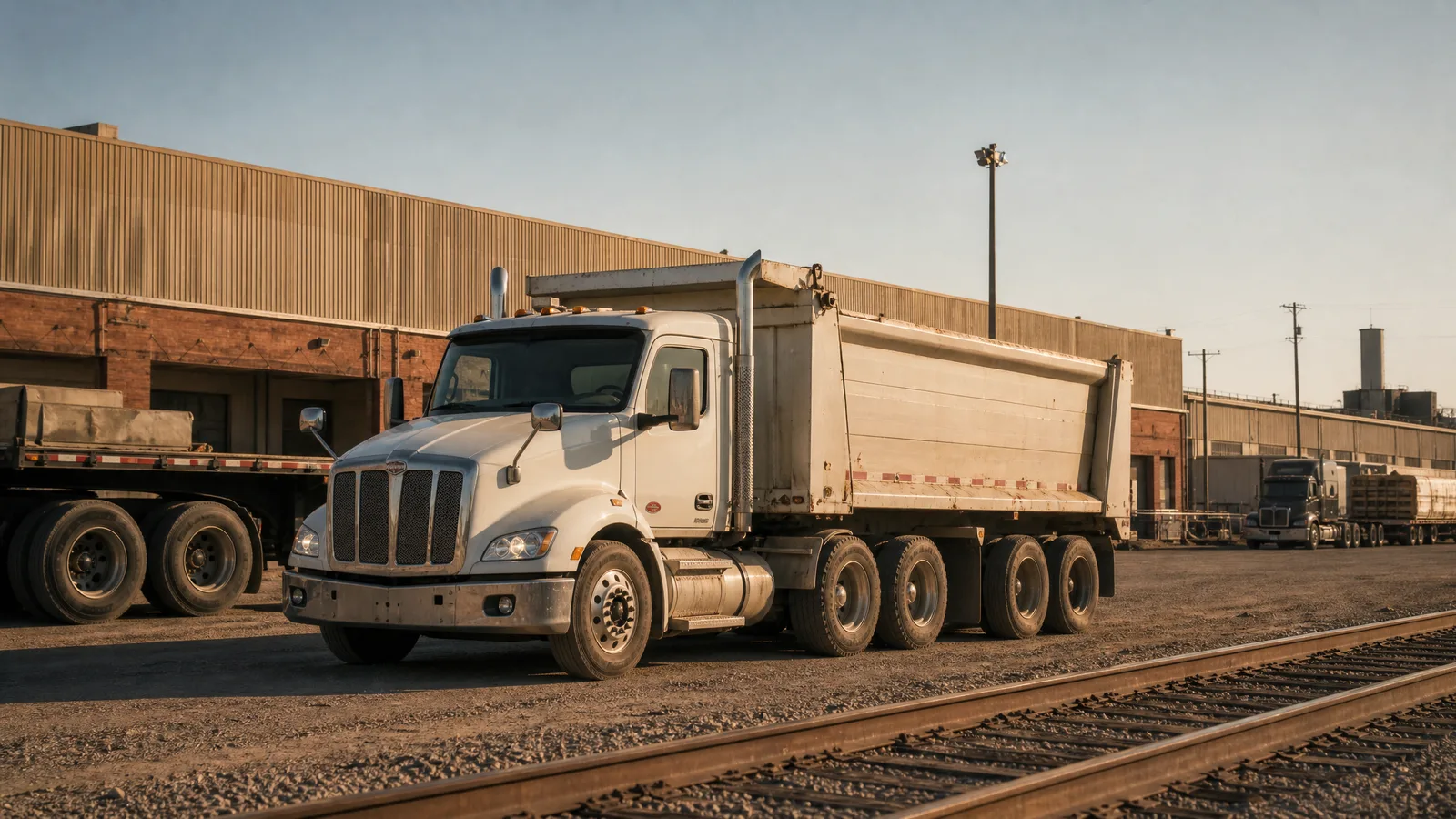
- Construction trucking. Year-round residential and commercial construction across DFW. TxDOT highway expansion projects (the I-35W corridor, I-820 reconstruction) sustain dump truck demand.
- Aviation freight. DFW International Airport and Alliance Airport produce regular air cargo drayage and ground freight movement.
- Distribution. Major retailer distribution centers in Tarrant and Denton counties (including Amazon, Walmart, and others).
- I-35W and I-30 corridor freight. Both connect Fort Worth to the rest of Texas and to Oklahoma and Arkansas.
Insurance Requirements for Fort Worth Operators
Federal FMCSA minimums apply for interstate (49 CFR 387.9): $750,000 for general freight, $1 million for oil transport, $5 million for hazmat. Texas intrastate minimum is $500,000 combined single limit (TxDMV rule 43 TAC 218.16). Cargo insurance has no federal minimum for general freight; brokers and shippers set the requirement, typically $100,000 minimum. For the full breakdown, see the Texas truck insurance requirements guide.
Coverage for Fort Worth Operators
- Cargo limits sized to commodity. Intermodal containers can hold high-value goods. Oilfield equipment cargo runs high. Most Fort Worth operators carry cargo in the $100,000 to $500,000 range.
- Pollution liability for oilfield haulers. Frac sand, drilling fluids, produced water, and oilfield waste all carry environmental exposure.
- General liability for construction operators. Prime contractors set the limit in the subcontract, and on TxDOT work it flows down from the prime's own obligations. Get the insurance exhibit before quoting.
- Hail-aware comprehensive. North Texas hail exposure applies to Fort Worth as much as Dallas. Many operators carry separate hail deductibles or covered parking discounts.
- Trailer interchange coverage. Common for intermodal operators who pull containers and chassis owned by other carriers.
- Workers compensation. Optional in Texas; required by most major shippers and oilfield operators.
Insurance Cost Considerations in Fort Worth
Fort Worth rates run essentially in line with Dallas. The hail loss frequency is comparable. Liability rating reflects the same DFW metro factors. Differences within the metro are usually less about the city of Fort Worth specifically and more about the type of operation: intermodal drayage rates differently from over-the-road, oilfield service rates differently from general freight, and construction differs from distribution.
For specific cost ranges, see our commercial truck insurance cost guide.
How to Get Fort Worth Trucking Insurance Quotes
The right agent depends on the operation. Intermodal operators want agents who handle drayage and trailer interchange. Oilfield service operators want agents who write pollution coverage and high-limit commercial auto. Construction operators want agents who handle TxDOT subcontractor requirements.
Find an agent who serves Fort Worth and the DFW metro. Tell them what you haul, where you run, and what your customers require.