
Flatbed Truck Insurance: What You Need
Flatbed trucking has unique risks that other freight segments do not. Loads are exposed to weather, road debris, and the elements during transport. Securement failures can cause loads to shift or fall off the trailer, creating both cargo damage and serious public safety incidents. Oversized and overweight loads add permit, escort, and route compliance requirements. Heavy haul work involves cargo values that can run into the hundreds of thousands of dollars per load.
Flatbed insurance is the same product set as other commercial trucking, but the rating, endorsements, and policy structure all reflect these risks. Operators new to flatbed often discover that their old dry van or general freight insurance does not transfer cleanly. Working with an agent who writes flatbed regularly is the simplest way to make sure your coverage matches your operation.
Common Flatbed Cargo and Risk Profiles
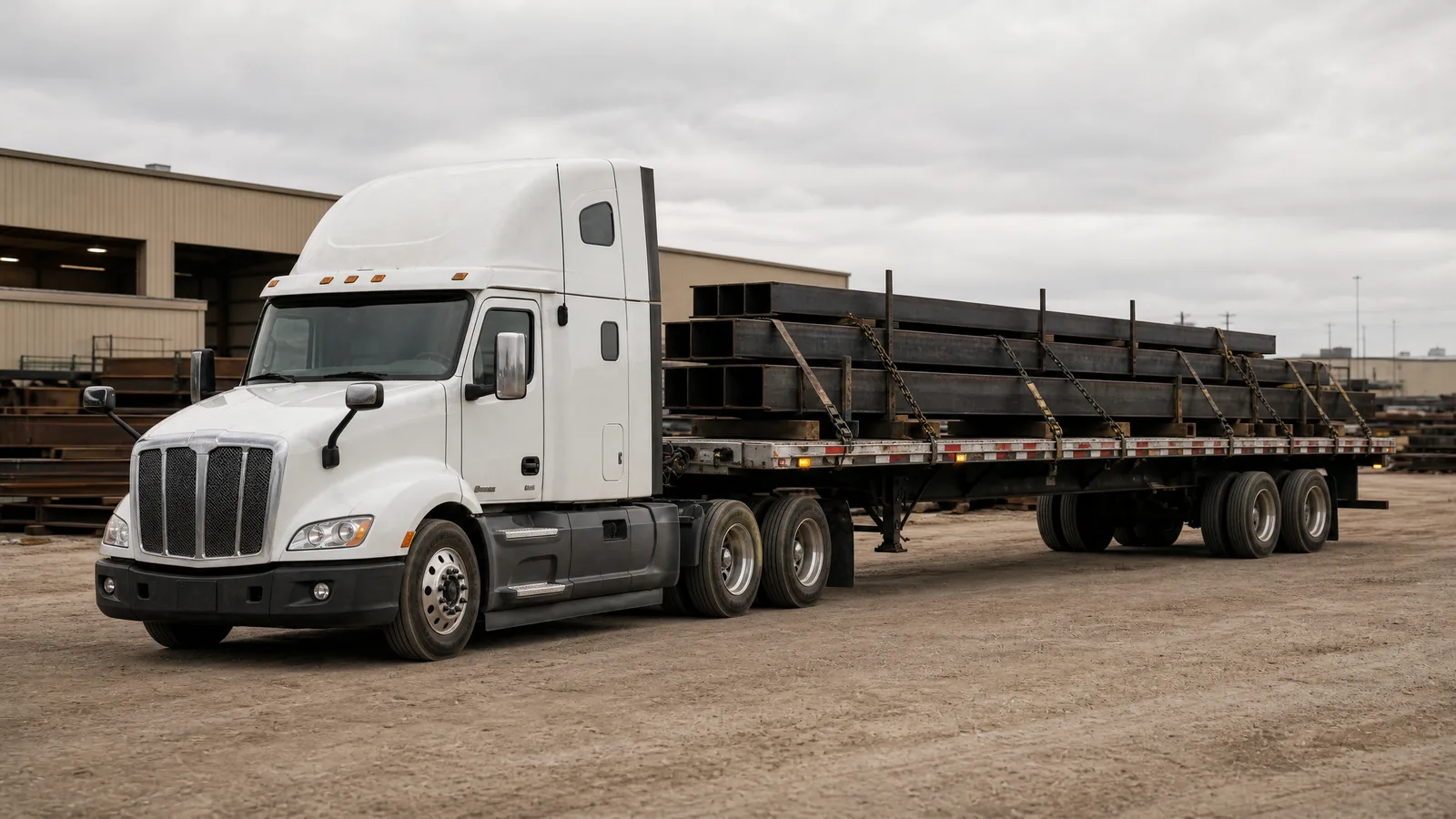
- Steel coils and steel products. Heavy, dense loads with specific securement requirements. Coils that shift can roll off the trailer at speed. Major risk segment with carrier-specific securement protocols.
- Lumber and building materials. Most common general flatbed cargo. Standard securement (straps and tarps) usually covers it. Lower risk than specialty flatbed.
- Pre-cast concrete and stone. Heavy, bulky, awkward shapes. Often requires specialty trailers (drop deck, extendable). Common in Texas construction.
- Oilfield equipment. Drilling components, pump jacks, separator vessels, and other oil and gas equipment. High value, often oversized, often requires specialty equipment to load and transport.
- Heavy machinery. Bulldozers, excavators, road graders, and other construction equipment. Common Texas freight for both construction and oilfield service work.
- Wind energy components. Wind turbine blades, towers, and nacelles, moving to and from the West Texas wind farms. Specialty heavy-haul work with route restrictions and permit requirements.
- Military equipment. Specialty work with specific contract requirements and security protocols.
Coverage Types for Flatbed Operators
- Commercial auto liability: Required for all motor carriers. FMCSA $750,000 minimum for general freight (49 CFR 387.9). Most flatbed shippers require $1 million; oilfield contracts often require $2 million plus umbrella.
- Cargo insurance: Critical for flatbed because the cargo is exposed and securement-related claims happen. Limits typically $100,000 for general flatbed; $250,000+ for steel, machinery, and oilfield freight; higher for specialty or heavy-haul.
- Physical damage on tractor and trailer: Flatbed trailers are expensive and exposed to damage during loading and unloading. Most flatbed operators carry physical damage on the trailer separately from the tractor.
- General liability: Standard $1M / $2M for site operations, loading and unloading at customer locations.
- Trailer interchange coverage: Covers physical damage to trailers owned by other carriers when in your care.
- Hired and non-owned auto: For carriers using owner-operators or trip-leases.
- Pollution liability: For oilfield haulers, hazmat operators, and anyone hauling cargo that could spill or leak.
- Umbrella / excess liability: Common for flatbed operators because the catastrophic claim potential (load drops, oversized load incidents) is higher than dry van.
Load Securement and Cargo Insurance
Load securement is the single biggest cargo claim driver in flatbed operations. The Federal Motor Carrier Safety Regulations specify securement requirements for different cargo types (49 CFR 393 Subpart I). Failures can produce dropped loads, road debris incidents, and serious injuries to other motorists.
Standard cargo policies often have specific exclusions or conditions related to securement:
- Exclusion for inadequate securement. Some policies exclude losses caused by failure to follow standard securement practices. Read the policy form carefully.
- Coinsurance requirements. Some policies require the operator to bear a portion of any securement-related claim.
- Specific load securement endorsements. Available with many insurers; expand or clarify coverage for securement-related claims.
- Driver training requirements. Some carriers require documented driver training on securement before binding coverage. Failure to train can result in denied claims.
Talk to your agent specifically about securement-related exclusions and endorsements before binding flatbed coverage. The policy form details matter more in flatbed than in dry van.
How Much Does Flatbed Truck Insurance Cost?
Flatbed pricing tracks what you haul and how it is secured. Standard building materials sit at the low end, oversize and oilfield at the high end. Ordered from lowest to highest typical premium, holding driver record, operating radius, and coverage limits constant:
- Small fleet (3 to 10 trucks), general flatbed
- Single owner-operator, general flatbed (lumber, building materials)
- Single owner-operator, steel and machinery
- Small fleet, oilfield specialty
- Single owner-operator, oilfield equipment
- Single owner-operator, oversized / heavy haul
Flatbed Insurance in Texas
Texas has one of the largest flatbed markets in the country, anchored by oilfield activity, construction, wind energy, and steel and lumber distribution. Texas-specific considerations:
- Eagle Ford and Permian oilfield demand. Significant flatbed demand for drilling components, pump jacks, and equipment moves. Higher premiums but steady work.
- Wind energy. West Texas wind farms generate steady turbine component freight. Moving blades, towers, and nacelles is specialty heavy-haul flatbed work, often with route restrictions and pilot car requirements.
- Steel mills and lumber yards. Texas has major steel and lumber distribution hubs in DFW, Houston, and along the Gulf Coast.
- Construction. Year-round construction demand for materials hauling.
- I-10 and I-35 corridor work. Long-haul flatbed accumulates corridor mileage that factors into rating.
- Hurricane and hail exposure. Open-deck flatbed operations are exposed to weather. Comprehensive coverage matters.
For broader Texas market context, see our Texas commercial trucking insurance overview.
How to Get Flatbed Truck Insurance Quotes
Information to gather:
- Tractor and trailer year, make, model, VIN, GVWR, and value
- Trailer type (standard flatbed, drop deck, extendable, RGN, multi-axle)
- Cargo types you haul (be specific: lumber, steel coils, machinery, oilfield equipment)
- Operating radius and lanes
- Driver CDL info, MVR, and securement training records
- USDOT and MC number
- Customer types and any specific shipper insurance requirements
- Loss history (cargo and auto liability claims for past 3 to 5 years)
Find an agent who specializes in flatbed coverage. Tell them what you haul, where you run, and what your customers require.