
Why Laredo Coverage Crosses the Border
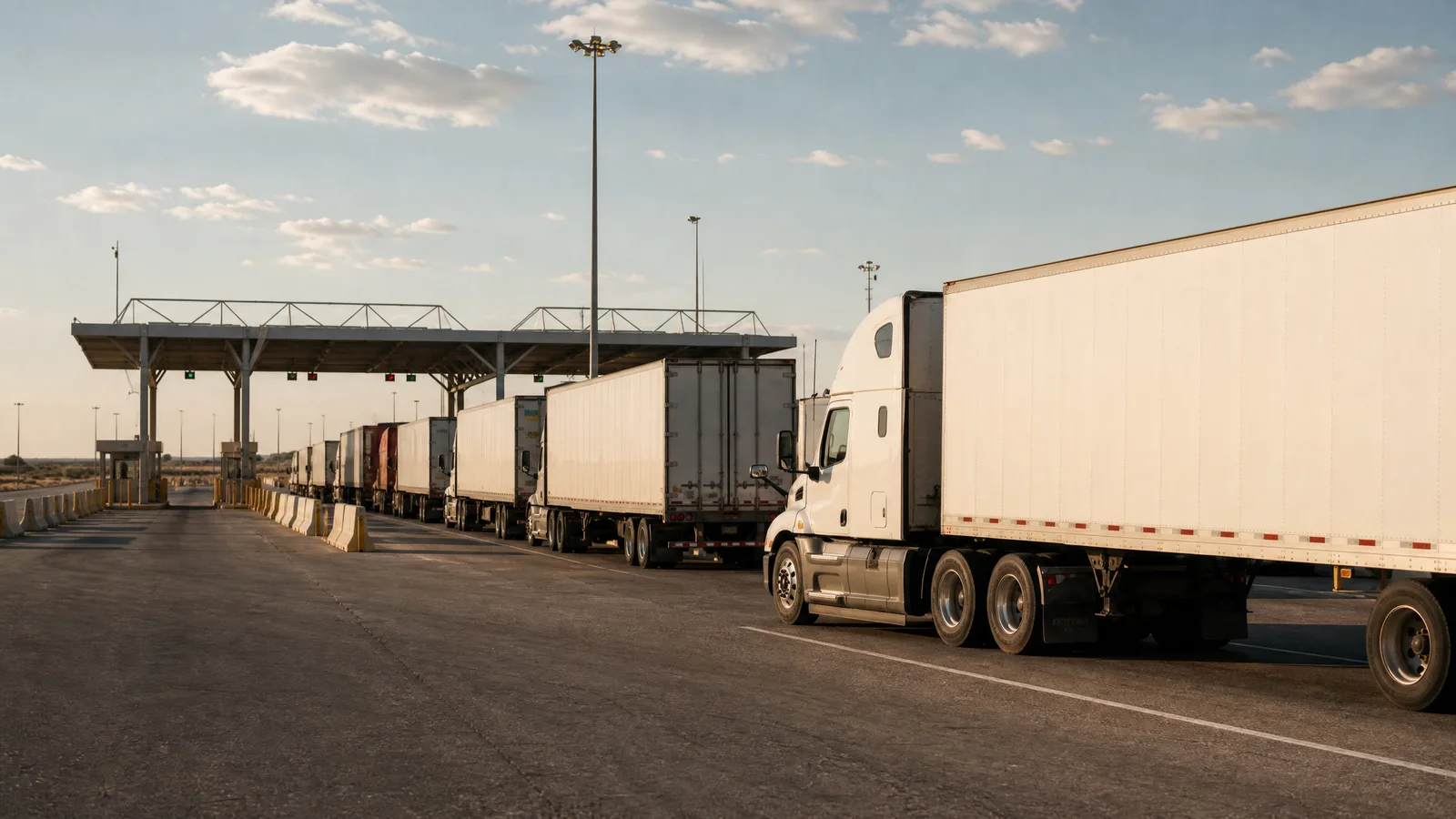
Laredo handles more truck crossings than any other US-Mexico port of entry. The World Trade Bridge, the Colombia Solidarity Bridge, and the Lincoln-Juarez Bridge collectively process thousands of trucks per day, carrying hundreds of billions of dollars in trade between Mexico and the rest of North America. Commercial trucking in Laredo is built around this border traffic: cross-border carriers running into Mexico, transfer drayage operators handling short-haul handoffs at the border, and long-haul operators moving freight northbound on I-35 to San Antonio, Dallas, and the rest of the US.
Laredo commercial trucking insurance is the same product set as anywhere else in the US, but cross-border operations require specific coverage that operators in interior Texas metros do not need.
The Trucking Industry in Laredo
- Cross-border carriers. Operators who cross into Mexico to pick up or deliver freight. Most are based in Laredo or in Nuevo Laredo across the border. Cross-border carriers need both US and Mexican insurance and often handle in-bond freight or specialized customs paperwork.
- Transfer drayage. Short-haul operators who move freight between Mexican carrier trucks and US carrier trucks at the border. Most transfer drayage stays within Laredo or runs short loops to nearby distribution facilities. Specialty work with specific cargo handling requirements.
- I-35 long-haul. Operators who pick up at the border and run northbound to San Antonio, Dallas, and beyond. Most freight crossing at Laredo travels at least to San Antonio (150 miles north) before being handed off or delivered.
- Auto industry freight. Mexican auto manufacturing (assembly plants in Mexico, parts plants throughout the country) produces significant freight movement. Auto haulers, tier-1 component carriers, and parts distributors all run through Laredo.
- Maquiladora freight. Mexican manufacturing plants that assemble or process goods for US markets. Output ranges from electronics to medical devices to consumer products.
- Refrigerated produce. Mexican fruits and vegetables enter the US through Laredo. Reefer operators handle this freight, often with strict temperature monitoring and food safety requirements.
Insurance Requirements for Laredo Operators
Federal FMCSA minimums apply for interstate operations (49 CFR 387.9). Texas intrastate minimums apply for in-state operations (TxDMV rule 43 TAC 218.16). Cargo insurance has no federal minimum for general freight; brokers and shippers set the requirement, typically $100,000+. See the Texas truck insurance requirements guide for the full federal and state breakdown.
Cross-border operations require coverage US-only operators do not need:
- Mexican auto insurance. Required for any operations south of the border. US policies do not cover Mexican claims. Mexican coverage must be issued by a Mexican-licensed insurer.
- Customs bonds. In-bond freight requires a customs bond. Single-trip bonds for occasional cross-border work; continuous bonds for regular operators.
- C-TPAT certification. Voluntary but often expected by major shippers. Provides expedited border crossing and signals supply chain security to customers.
- F.A.S.T. (Free and Secure Trade) program. Allows certified drivers expedited crossing through dedicated lanes.
Coverage for Laredo Operators
- US commercial auto liability. $1 million minimum; $2 million is standard for major shipper contracts.
- Mexican auto insurance. Required for cross-border. Coverage must meet Mexican legal minimums; many shippers require higher limits.
- Cargo insurance with cross-border coverage. Standard US cargo policies often have territorial limits. Cross-border operators need policies that cover Mexican operations.
- Customs bond. Required for in-bond freight handling.
- High-value cargo coverage. Auto industry freight, electronics, and pharmaceutical freight often require $250,000+ cargo limits.
- Reefer breakdown endorsement. For produce and temperature-sensitive freight.
- Physical damage with theft endorsements. Border-area theft and hijacking risk historically pushes some carriers to require GPS tracking, secured trailer protocols, and route restrictions.
- General liability. Standard for operators handling freight at warehouses, transfer facilities, or distribution centers.
- Trailer interchange coverage. Common for transfer drayage operators who pull trailers belonging to other carriers.
Insurance Cost Considerations in Laredo
- Cross-border coverage adds cost. Mexican auto insurance, cross-border cargo endorsements, customs bonds, and security-related requirements all add to total annual cost compared to US-only operations.
- Theft and security factor in. Carriers price border-area operations with elevated theft exposure. GPS tracking, dashcams, and route restrictions are commonly required.
- Auto industry contract requirements. Auto manufacturers and tier-1 suppliers often require high primary liability limits ($2 million+) and umbrella stacks ($5 million+).
- Lower interior Texas exposure factors. Laredo has lower hurricane and hail exposure than DFW or Houston, which can mean modestly lower physical damage premiums for trucks garaged in Laredo.
- Long-haul I-35 mileage. Operators running Laredo to Dallas or beyond accumulate significant mileage that factors into liability rating.
For specific cost ranges, see our commercial truck insurance cost guide.
How to Get Laredo Trucking Insurance Quotes
Cross-border insurance is a specialty. Operators running into Mexico need agents who write both US and Mexican coverage, who understand customs bond requirements, and who know which carriers will actually write border-crossing operations. Transfer drayage operators need agents familiar with the unique short-haul transfer model. US-only operators (running northbound from Laredo without crossing south) can work with general commercial trucking agents.
Find an agent who serves the Laredo market. Tell them whether you cross the border, what you haul, and what your customers require.