
Box Truck Insurance: What You Need
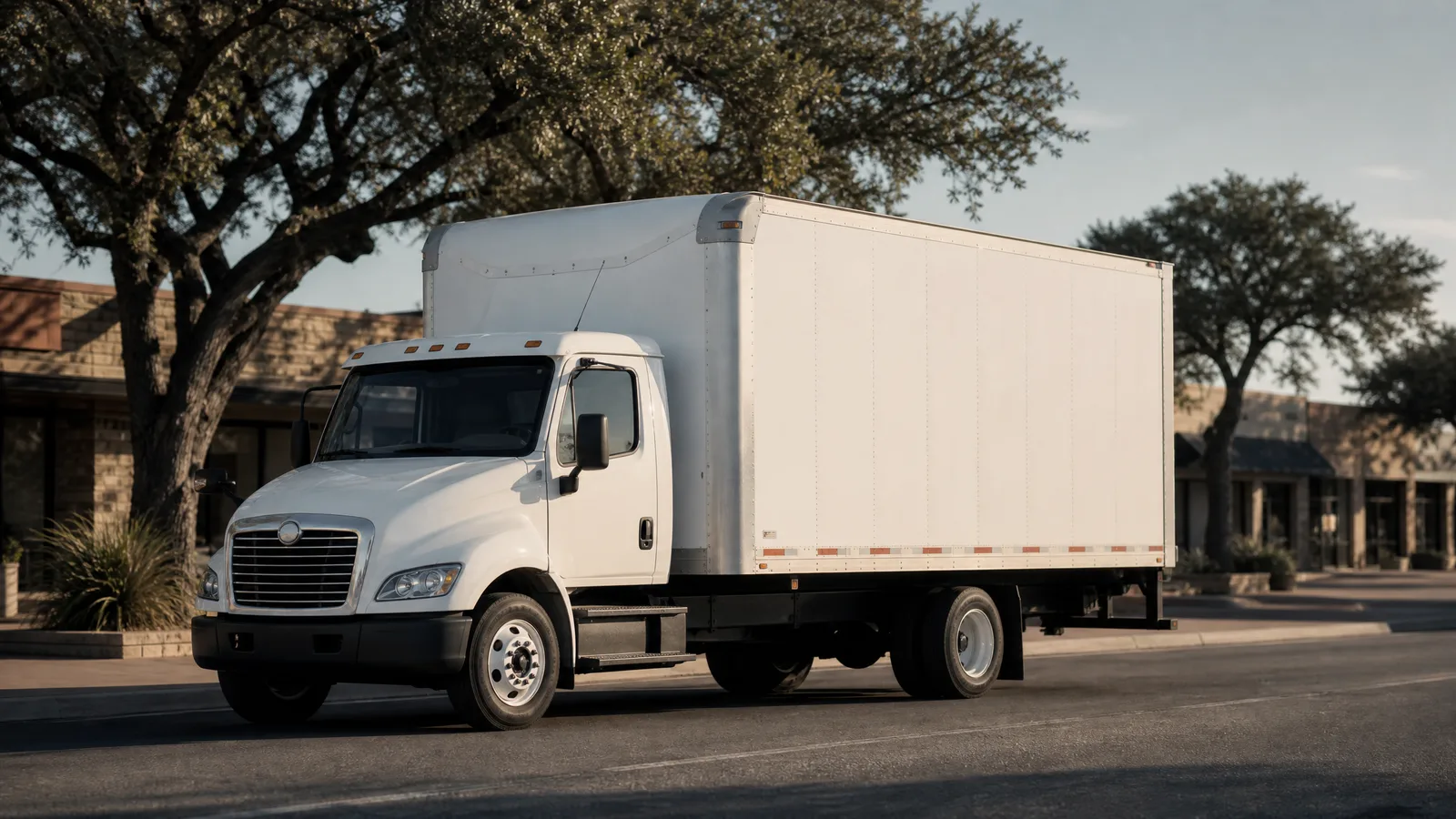
Box truck insurance is commercial auto coverage built for straight trucks with enclosed cargo bodies, ranging from 12-foot light delivery vans up to 26-foot non-CDL freight trucks. The use cases vary widely: last-mile delivery for major retailers, regional freight, residential moving, food service distribution, equipment delivery, and many other operations. The insurance products are similar but the rating, limits, and endorsements depend on what you haul and how you use the truck.
Box trucks are popular among new commercial trucking operators because they offer relatively low entry costs, do not always require a CDL, and serve a wide range of customer needs. Last-mile delivery has been one of the fastest-growing segments in commercial trucking and box trucks are the dominant equipment for that work.
Coverage Types for Box Truck Operators
- Commercial auto liability: Required for all for-hire operators. FMCSA $750,000 minimum if you operate a truck over 10,001 lbs GVWR interstate for hire (49 CFR 387.9). Most major shippers require $1 million.
- Cargo insurance: Limits sized to commodity. Last-mile delivery often $25,000 to $100,000. Freight haulers often $100,000+. Specialty cargo (electronics, alcohol, pharmaceuticals) often $250,000+.
- Physical damage: Covers the truck for collision and comprehensive. Required if financed.
- General liability: Covers non-driving business risks like loading dock incidents, customer property damage, and employee-on-customer interactions.
- Workers compensation: Optional in Texas but typically required by major shippers (Amazon, FedEx Ground, Walmart, etc.) for any operator with employees.
- Hired and non-owned auto: For operators who use rental trucks or contractor-owned vehicles.
- Inland marine / equipment floater: If you carry tools or equipment that are not the cargo (delivery handcarts, ramps, dollies).
CDL vs. Non-CDL Box Trucks
The CDL threshold is a GVWR of 26,001 lbs. The most common box trucks in commercial use:
| Box Truck Size | Typical GVWR | CDL Required? | FMCSA Rules? |
|---|---|---|---|
| 12 to 16 ft | 10,000 to 14,000 lbs | No | No (under 10,001 lbs) |
| 20 ft | 14,000 to 18,000 lbs | No | Yes (if interstate for-hire over 10,001 lbs) |
| 24 ft | 18,000 to 25,000 lbs | No (just under threshold) | Yes |
| 26 ft | 26,000 lbs (non-CDL) or 33,000 lbs (CDL) | Sometimes (depends on actual GVWR) | Yes |
| 28 to 33 ft (CDL) | 33,000+ lbs | Yes (Class B) | Yes |
Source: FMCSA CDL requirements.
How Much Does Box Truck Insurance Cost?
Box truck premiums track use case, cargo value, and operating radius more than truck size. Ordered from lowest to highest typical premium, holding driver record, operating radius, and coverage limits constant:
- Last-mile delivery, fleet of 5+ trucks
- Last-mile delivery, single non-CDL box truck
- Moving/household goods box truck (specific FMCSA rules apply for interstate household goods)
- Freight box truck, regional, owner-operator
- Food service / refrigerated box truck (reefer adds cargo and equipment exposure)
- High-value cargo (electronics, alcohol)
Last-Mile Delivery Insurance Considerations
Last-mile delivery has become one of the largest box truck use cases. Major customer programs (Amazon DSP, FedEx Ground, regional retail) have specific insurance requirements that often exceed standard FMCSA minimums. Common requirements:
- $1 million commercial auto liability per occurrence
- $1 million general liability per occurrence, $2 million aggregate
- Workers compensation for all employees
- Employer's liability ($500,000 to $1 million)
- Hired and non-owned auto coverage
- The shipper or carrier named as additional insured on auto and general liability policies
- Waiver of subrogation in favor of the shipper
- Primary and non-contributory wording
Major last-mile programs publish their insurance requirements. Amazon DSP requirements are published in the Amazon contractor portal. FedEx Ground requirements are in the contracted service agreement. Always verify the current requirements with the program before binding coverage; specifications change over time.
Box Truck Insurance in Texas
Texas has one of the largest box truck markets in the country. Major distribution hubs in DFW, Houston, San Antonio, and Austin produce steady last-mile and middle-mile demand. Specific Texas considerations:
- Workers compensation is optional in Texas. Most major shippers require it anyway. Most multi-truck box truck operators carry it.
- I-35, I-10, I-45, and I-20 corridor exposure. Box truck operators running between Texas metros accumulate corridor mileage that factors into rating.
- Hail in DFW. North Texas hail exposure pushes physical damage premiums up for trucks garaged in the DFW metro.
- Hurricane in Houston. Gulf Coast box truck operators face hurricane exposure on physical damage and comprehensive.
- Theft and vandalism in major metros. Box trucks, especially those carrying high-value cargo, are theft targets in major Texas metros. GPS tracking is often required by carriers.
For broader Texas market context, see our Texas commercial trucking insurance overview.
How to Get Box Truck Insurance Quotes
Information you will need:
- Truck year, make, model, VIN, GVWR, and box length
- Driver names and CDL info (if applicable; MVRs for non-CDL)
- USDOT and MC number, if applicable
- Use case (last-mile, freight, moving, food, specialty)
- Cargo types you haul
- Customer types and any specific shipper insurance requirements
- Operating radius and lanes
- Loss history
Find an agent who specializes in box truck coverage. Tell them what you haul, how you use the truck, and what your customers require.